


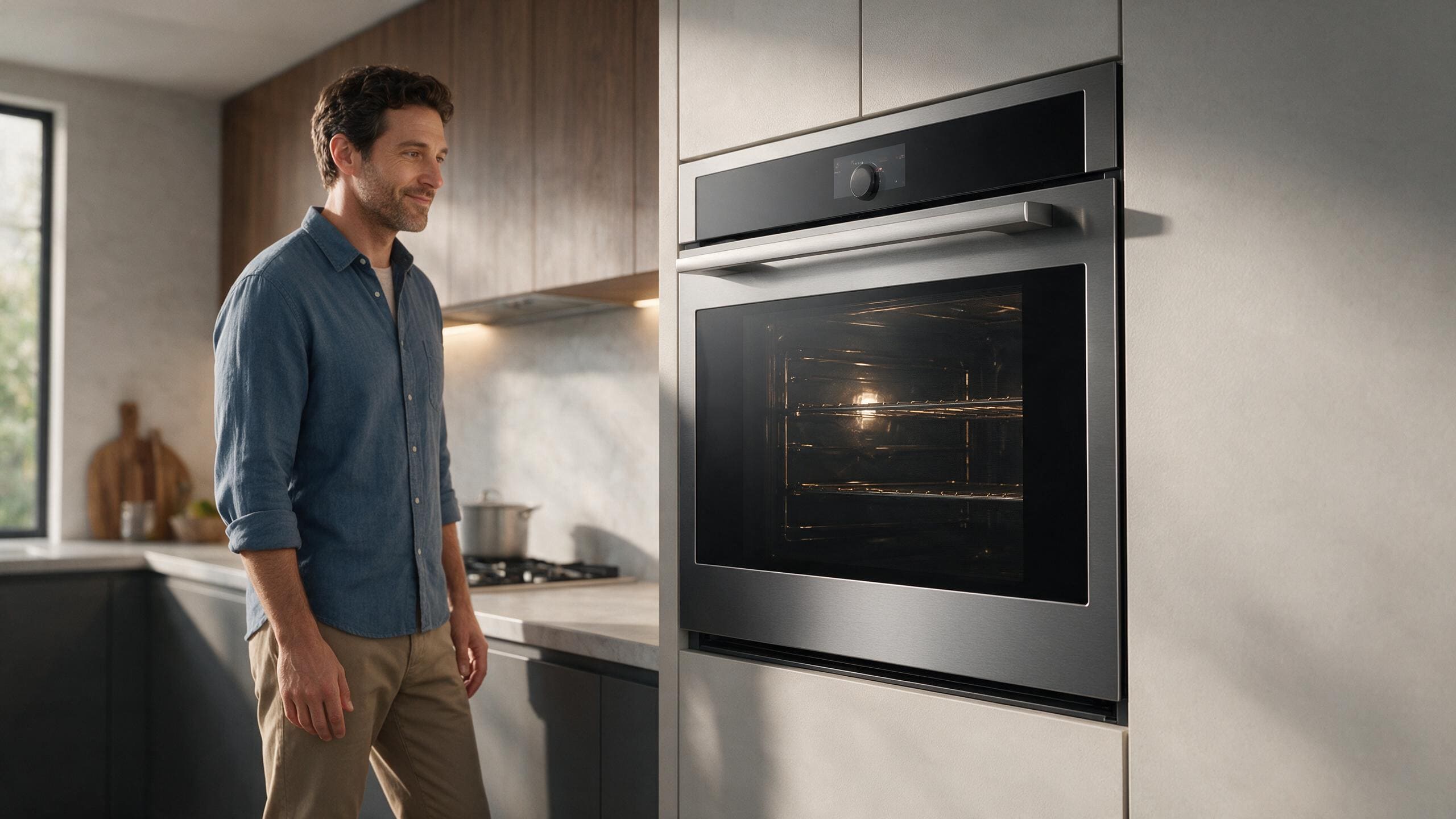
Viking oven preheat complaints are easier to evaluate when you compare the same mode, set temperature, starting condition, and load.
A Viking oven that seems slow to preheat is usually best judged by repeating the same test: same mode, same set temperature, an empty oven, and the same starting condition. If the oven then reaches temperature but only takes longer each time, or does not reach cooking temperature at all, that is the point to request a diagnosis.
Preheat time can feel inconsistent because the test conditions often change.
A cold oven on one mode, a partly warm oven on another mode, and a session with cookware already inside are not direct comparisons.
Use:
Run the test at least twice, on different days if possible, before drawing a conclusion. One slow preheat can come from an unusual start; two or three repeatable ones describe the oven.
Record the time to the oven’s normal preheat indication. Write the mode next to the time, because preheat times only compare within one mode.
The use-and-care manual for one Viking electric oven describes a Rapid Ready preheat system. It says preheating to 350F in the convection mode normally takes slightly longer than in the bake mode, because all of the racks must reach temperature. A slower number in one mode, then, can be normal.
The same manual says preheat time lengthens with a significantly colder room and with a power supply below 240 VAC. Check your own manual for the details that apply to your model.
Does the oven reach the target but simply take longer, or does it fail to reach normal cooking temperature?
A slow rise to the set point is different from stalling partway. Note the temperature at which the climb slows or stops, and whether the oven ever shows its normal ready indication. That single observation shortens a diagnosis a lot.
Those are different complaints.
One more difference is what is in the oven. Extra racks, a pizza stone, or heavy cookware stored inside all add mass that has to heat. Test with the oven empty, or with the same items every time.
If the oven recently experienced a breaker trip, electrical work, or another power change, include that history.
A power supply that reads lower than the oven expects can lengthen preheat on some electric models, and the manual for one Viking electric oven names a supply below 240 VAC. Measuring supply voltage is an electrician’s task, so limit your part to noting whether anything changed in the home’s electrical setup.
Do not open the oven or measure live element voltage yourself.
Installation changes matter too. If the oven moved to a different circuit, a breaker was replaced, or a power interruption occurred, the preheat behavior may have changed because of the supply, not the oven.
Likewise, a kitchen that is much colder than usual, or an oven that was just used for a long cooking session, changes the starting condition. Note either one next to the time you record.
If preheat is slower but the oven then cooks normally, that information matters.
If slow preheat appears with uneven baking, temperature errors, or a heating code, the system deserves a broader diagnosis.
| What you notice | What it can point to | What you can check |
|---|---|---|
| Preheat takes longer in convection than in bake | Mode difference | Compare each mode with itself |
| Preheat is slower than before in the same mode | A change worth recording | Repeat the test with the oven empty and note the date and mode |
| Oven never reaches the set temperature | Heating, sensing, power, or control | Stop testing and request a diagnosis |
| Oven heats but food cooks unevenly | Rack, pan, or airflow | See the uneven-baking check before blaming preheat |
| Display shows a code | A condition the control has flagged | Photograph it and use the Error Codes page |
Use Viking Oven Bakes Unevenly: Test Rack Position Before Blaming Temperature and Viking Oven Error Codes.
Book when the oven takes longer in the same mode each time, or when it never reaches normal cooking temperature.
A repeatable increase in preheat time can involve heating components, relays, power supply, sensing, convection, or controls.
The manual for one Viking oven also lists baking problems with causes that have nothing to do with preheat: wrong rack position, an oven that was not preheated, dark pans, too many pans, a door opened too often, and an oven or rack that is not level. If cooking results are the real complaint, eliminate those first.
Preheat is a convenient test because it happens before any food goes in. A repeatable change over several days, in the same mode and starting condition, is a stronger signal than a single slow evening.
If the oven preheats on time but the food still cooks wrong, move on to rack position and pan checks instead of timing preheat again.
It can. The manual for one Viking electric oven says preheat time lengthens in a significantly colder room.
Yes. Opening the door releases heat and extends the time, so keep it closed until the preheat indication appears.
Compare the indication against an oven thermometer placed in the same spot each time. If the oven says it is ready but the thermometer lags well behind in repeated tests, record both numbers for the diagnosis.
Request Viking Oven Repair with the model/E-Nr, mode, set temperature, and measured preheat time.
Use consistent conditions. Follow the cooking guidance for the model.
No.
A normal model-approved reset can be tried once when there is no unsafe electrical condition.
Share a few details and we’ll confirm an appointment. Prefer to talk? Call us and we’ll help right away.
Use the secure scheduler below to request your appointment.