


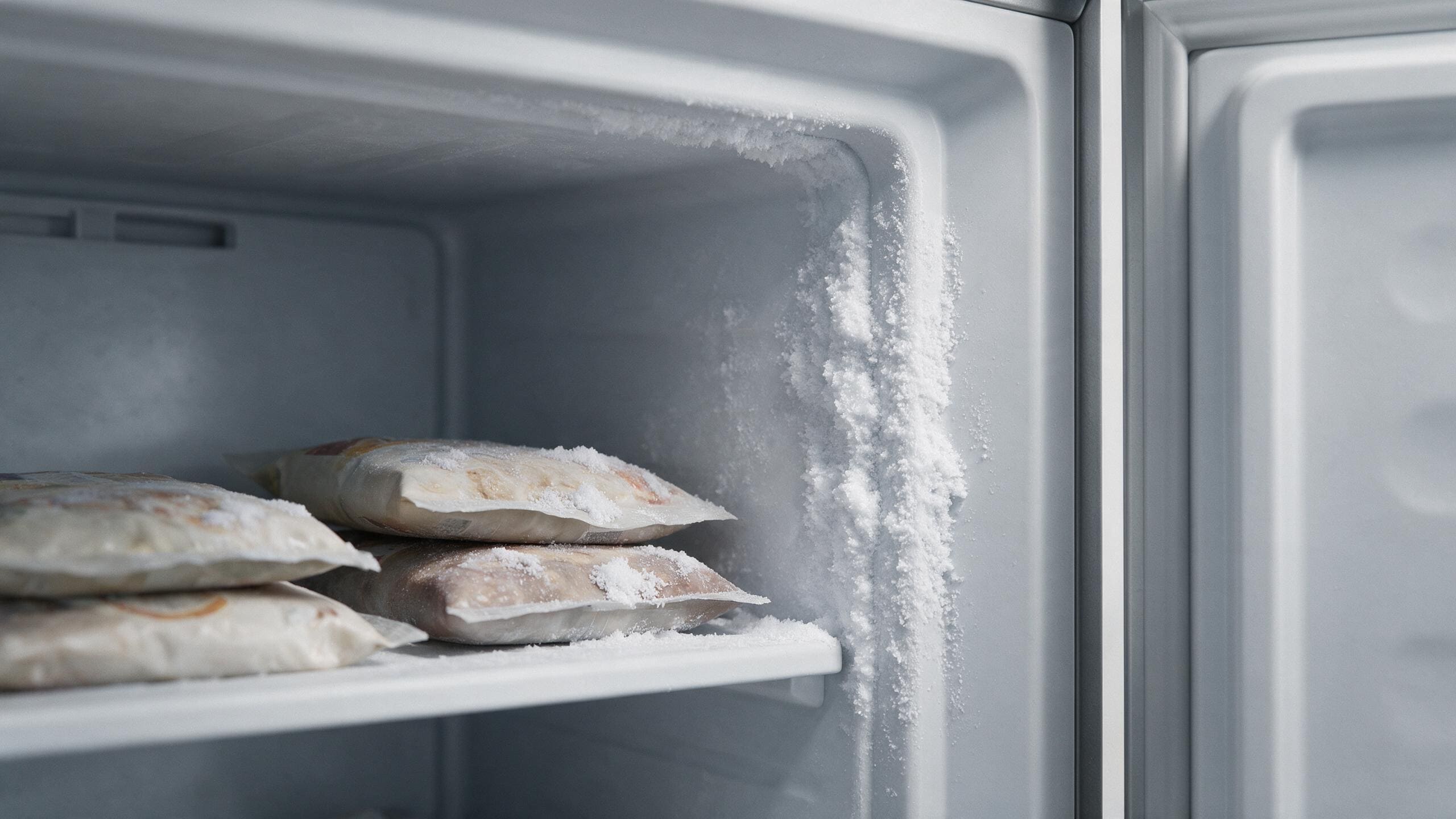
Recurring Viking freezer frost usually means moisture keeps reaching a cold surface. safe checks for doors, loading, and patterns.
Recurring frost in a Viking freezer usually points to moisture getting in, through a door that is not closing fully, a worn or dirty gasket, or frequent door opening, before it points to a failed component. Check that packages are not holding the door open and clean the gasket, then watch whether frost returns in the same place. If it keeps coming back or the temperature climbs, book a model-specific diagnosis.
Frost is frozen moisture. When it keeps returning, the useful question is where that moisture is coming from and why it is reaching a surface cold enough to freeze.
A light temporary film after extended door opening is different from thick frost that repeatedly builds in the same place. Where the buildup sits and how fast it returns after you clear it tell more than how much there is.
Photograph the pattern before removing it. Note whether it is:
The location can help distinguish door-sealing, airflow, defrost, and drainage paths.
Make sure packages or bins do not prevent the door from closing fully. If the door has to be forced shut because of what is inside, that load is the first thing to rearrange. A door that looks closed but sits a little off the cabinet is worth a second look at the hinge side and the bins behind it.
Clean visible gasket debris. Do not assume the gasket is the cause simply because frost is near the front; alignment and loading can also matter.
| Symptom | What it can point to | What you can safely check |
|---|---|---|
| Frost at the door edge | Door not closing fully, or gasket debris | Look for packages in the way and clean the gasket |
| Frost across food packages | Warm humid air entering, or an overfilled cabinet | Reduce clutter so air can move |
| Heavy frost near an air path | Blocked airflow or a larger system issue | Clear space around visible vents and watch the pattern |
| Frost with a rising temperature reading | A cooling or defrost fault | Take a thermometer reading and book service |
| Water pooling in the cabinet | Melting frost with nowhere to go | Stop use of the area and book service |
The use-and-care manual for one Viking bottom-mount refrigerator says to clean the door gaskets every three months and to apply a light film of petroleum jelly to keep them pliable. It also warns that overcrowding blocks air movement. Together, those two points cover most of what a homeowner can change: a gasket that seals, and a cabinet that is not packed against the vents.
That model sounds an Open Door alarm after three minutes. Alarms differ between Viking series, so the manual for your exact unit is the place to confirm what yours does.
The manual for one 5 Series built-in freezer says a High Temperature alarm sounds and the HIGH TEMP light glows if the temperature has been too high for two hours, and a flashing POWER indicator shows after a power loss. A freezer with heavy frost and one of these alarms is describing a temperature problem and not only a cosmetic one, so protect the food and book service.
A knife or screwdriver can damage liners, tubing, or hidden components.
If defrosting is required by the owner manual, follow the model procedure and protect food safely. If frost returns quickly after a proper defrost, the recurrence is the important evidence. Which defrost steps are acceptable depends on the manual for your exact unit, and a quick return of heavy frost afterward is the signal to book service.
Measure the freezer temperature. Frost plus rising temperature can point to a different level of urgency than frost with otherwise stable cooling. The freezer reading is the fact that tells a cosmetic buildup from a cooling problem, and a single reading taken after the cabinet has stabilized is worth more than several taken right after the door was opened.
Also note new fan noise. Ice contacting a fan can create a repeating scrape or buzz. That kind of noise belongs with the frost pattern when you describe the problem, because the two can share a cause.
Recurring heavy frost can involve door sealing, defrost heating, sensing, drainage, airflow, fans, or controls. Those systems need model-specific diagnosis once the external checks are exhausted.
Use Viking Refrigerator Models and Viking Refrigerator Repair rather than ordering a defrost component from the frost pattern alone.
Yes. Humid room air entering through a door that is held open or not sealing is one way moisture reaches a freezer. One Viking manual sets an Open Door alarm after three minutes for that reason.
The manual for one Viking refrigerator says every three months, with a light film of petroleum jelly to keep it pliable. Wipe off debris sooner if it collects in the folds.
The Viking manual says overcrowding blocks air movement, which can disturb the airflow the cabinet relies on. Leave room around vents and keep items off the door seal.
A photo of the frost pattern before cleaning is useful for service.
No. Small temporary frost can follow humid air entering during door opening. Heavy or recurring buildup deserves attention.
Follow only the model-approved defrost procedure. Uncontrolled heat can damage the appliance.
Not automatically.
Share a few details and we’ll confirm an appointment. Prefer to talk? Call us and we’ll help right away.
Use the secure scheduler below to request your appointment.