


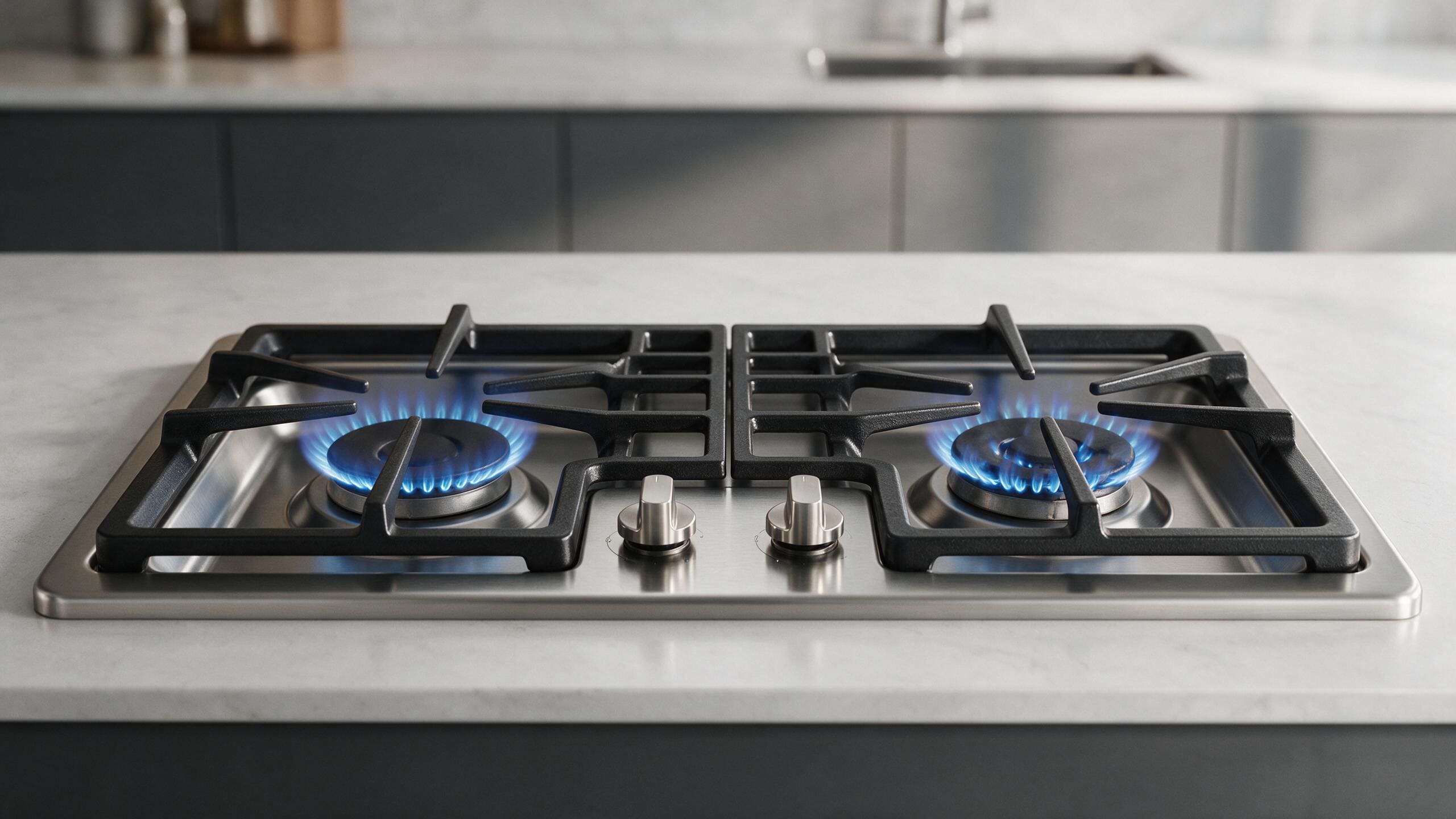
A changed Viking gas flame can involve burner cleanliness, cap position, moisture, or a gas/combustion condition. Use only safe external checks.
A changed gas flame on a Viking cooktop often comes down to a wet, dirty, or misplaced burner cap, so cool the cooktop, then check that the cap is clean, dry, and seated level. If the flame is lifting, flaring, going out, or there is any gas odor, stop using it and shut off the gas supply if it is safe to reach.
A burner flame that suddenly becomes uneven deserves attention because the pattern can reflect something as simple as a wet or misplaced cap — or something that should not be handled as DIY gas work.
Turn the burner off and wait until removable parts are safe to handle.
The use-and-care manual for one Viking range lists a flame that is large, distorted, or yellow as pointing to clogged burner ports, the wrong gas type, or air shutters that are not properly adjusted. Only the first of these is something a household can address, through cleaning the removable parts, and the other two belong to a technician.
The same manual describes an electric ignition system with no standing pilot, where the knob acts as both a gas valve and an electric switch. That means a flame problem can involve the cap, the port, the gas supply, or the ignition, and the shape of the flame helps separate them.
If the model uses removable burner caps or heads, make sure they are:
Use the owner instructions for cleaning.
Do not enlarge ports with needles, drills, or wire. The manual for one Viking range says to clean clogged burner ports with a straight pin and never to enlarge the ports or use a toothpick, so follow your own manual for what is allowed.
Clean burner caps after spillovers, since the same manual says clean caps help prevent improper ignition and uneven flames. Dry everything thoroughly before putting it back, and do not wash caps in a dishwasher or self-cleaning oven.
When replacing the burner head, the manual for one Viking range describes aligning the two tabs with the burner base edge, keeping them away from the igniter, and making sure the cap is level with the arrow toward the back of the range. A cap that rocks or sits crooked can change the flame pattern all by itself.
If one burner has changed but others remain stable, record that.
If every burner changed at the same time, household gas supply or another shared condition may be relevant.
| What you see | What it can point to | What you can safely check |
|---|---|---|
| Uneven or one-sided flame after cooking or cleaning | Food residue, moisture, or a cap that is not seated | Cool the burner, clean and dry the parts, and reassemble per the manual |
| Yellow, large, or distorted flame | Clogged ports, gas type, or air shutter adjustment | Clean the removable parts; leave the rest to a technician |
| One burner changed, others normal | A condition at that burner | Record which burner and compare with the others |
| All burners changed together | A shared condition such as supply | Stop and record it; do not adjust anything |
| Flame lifts, flares, or goes out | Stability problem with combustion or supply | Turn the burner off and request a diagnosis |
| Gas odor | Immediate safety issue | Do not light anything or use switches; leave and call the gas supplier from a neighbor’s phone |
A flame that lifts, goes out, flares unusually, or is difficult to control deserves more attention than a minor visual difference.
Persistent gas odor is an immediate reason to stop.
The manual for one Viking range says that if you smell gas you should not light any appliance, touch electrical switches, or use a phone in the building, and should call the gas supplier from a neighbor’s phone. If the supplier cannot be reached, the manual says to call the fire department.
If the burner returns to normal after drying and correct assembly, continue to monitor it.
If the pattern remains abnormal, internal gas-valve, ignition, or supply diagnosis is not a homeowner task.
Before calling, note which burner changed, whether the change appeared right after cleaning or a spill, and whether the burner still lights on the first attempt. Those three details tell a technician whether to look first at the burner parts, the ignition, or the supply.
Most often a part is wet or not seated level. Dry the parts, reassemble them following the manual, and check again before concluding anything else.
The manual for one Viking range says that during a power failure the electric igniters will not work and no attempt should be made to light the appliance. Normal operation resumes when power returns.
The manual for one Viking range lists a yellow flame among the signs of clogged ports, the wrong gas type, or air shutters that are not adjusted properly. Clean the removable parts, and if the color persists, request a diagnosis.
Use Viking Gas Burner Clicks but Won’t Light: Safe External Checks and Viking Cooktop Repair for persistent burner problems.
Yes, residue or cap position can disturb the normal pattern.
No.
Some patterns can affect combustion or stability. If the flame is unstable or there is gas odor, stop use.
Share a few details and we’ll confirm an appointment. Prefer to talk? Call us and we’ll help right away.
Use the secure scheduler below to request your appointment.